Survey in the Harz
Targeted collection of zinc-related archaeological materials
Given the vast quantity of archaeological material in the storerooms of the NLD Goslar, the field survey aimed at the identification of specific materials from selected areas closely connected with the smelting of Rammelsberg ores explicitly mentioned in historical sources in relation to the observation, production and use of Ofengalmei for brass production in the Harz. Written sources indicate that, during the 16th century, the innovation, or rediscovery, attributed to Erasmus Ebner, namely the use of Ofengalmei as a cementation agent, led some of the local workshops (Hütten) to specialise in the production of brass semi-finished products. In parallel, other areas were involved in the systematic re-collection and re-sorting of waste of Ofengalmei, discarded in previous periods together with slags in dump heaps, in order to meet the growing demand for brass. This phase represents the peak of independent brass production in the Harz, replacing the earlier import of calamine from the Aachen area.
Historical texts identify several key workshops, such as Bundheim, the Oker area with Frau Marienhütte and the Messinghütte, alongside other zones where re-sorting activities were frequent, including the Radau Valley, Galmhütte in Oker, Glockenhütte, Neue Hütte, and the Innerste Valley, with Sophienhütte and the Gowische Hütte. Targeted surveys were therefore carried out in these areas, focusing primarily on furnace walls and technical ceramics, but also on the possible identification of zinc cakes or Ofengalmei itself. Fieldwork was conducted in a semi-blind mode, as zinc-rich compounds and metallic zinc, observed mainly through experimental archaeology, can change appearance rapidly in the field due to oxidation and weathering (especially considering the delicate structures of the compound, ot compleely adhese, on the side, and the predisposition to rapidly oxidise the metal).
In all surveyed areas, zinc-rich slags were collected, confirming the smelting of zinc-bearing ores and supporting the historical documentation.
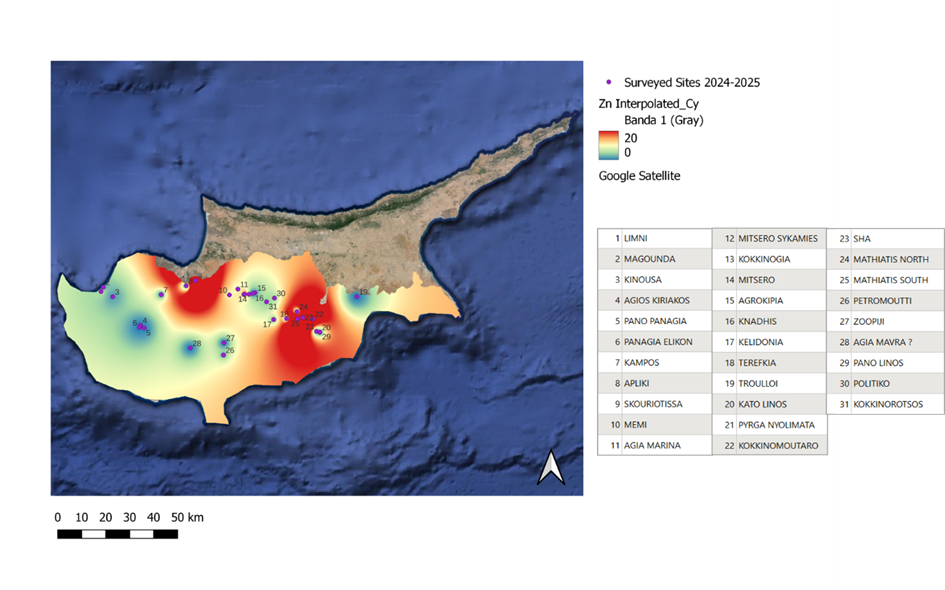
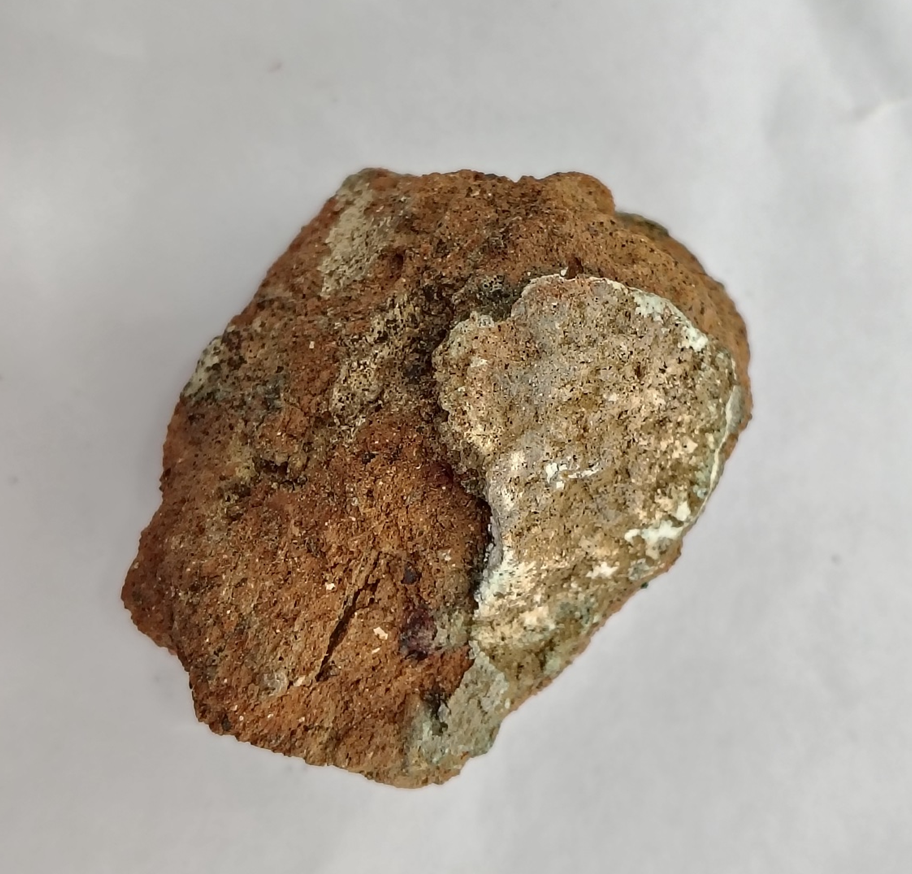
In the final survey area, Bredelem, investigated in connection with the Gowische Hütte in the Innerste Valley, a distinctive dense white material was recovered, occurring as coatings of schist fragments, or impregnating schist layered structure, or whitish scales without substrate, present in the dump heaps with slag fragments and heathen schists. Analytical investigation suggests that this material, composed for the main part by zinc oxide, with metallic zinc prills and at times charcoal fragments, can correspond to Ofengalmei or metallic zinc residuals, likely related to the use of schist lining of the furnace chimeys and the Zinkstühle, specifically installed in furnaces to enhance metal yield and to promote oxide condensation, simplifying also its collection wihout damaging the furnace structure.
Survey in the Troodos
Integrating textual sources, mineralogical indications, experimental observation and Harz results to identify the zinc presence in the Cypriot metallurgical context
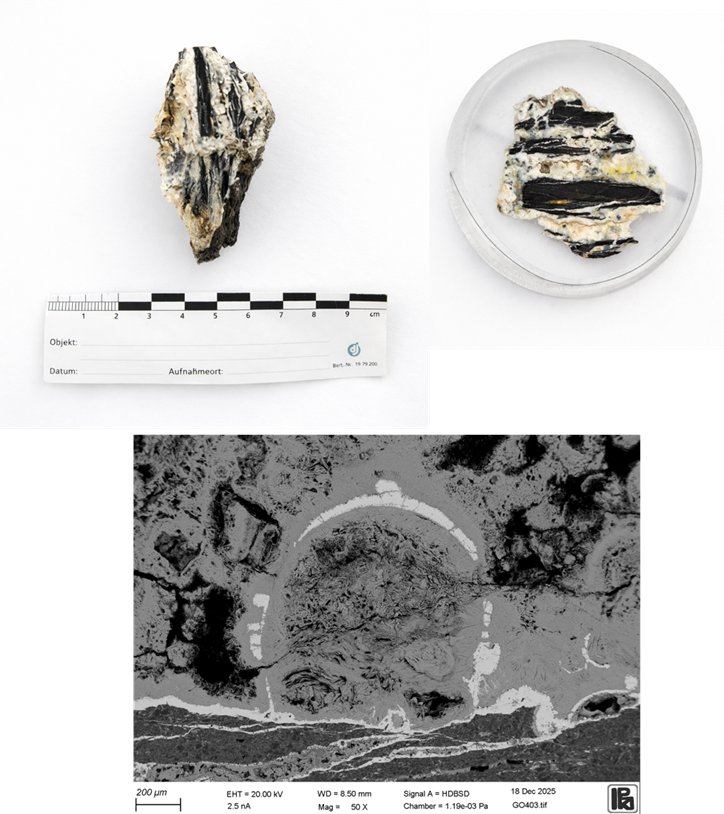
From November 2024, in parallel with the work conducted in the Harz, fieldwork began in the Troodos Mountains. Building on the results obtained in Germany and the preparatory study, a preliminary research protocol was developed to guide the survey, focusing on the identification of zinc-rich slag fragments and zinc-rich technical ceramics. Fieldwork was carried out in cooperation with Dr Charalambous, project partner for the Troodos Mountains, who also supported the execution of in situ pXRF analyses.
It was possible to conduct a highly targeted survey in mining areas in the vicinity of high-zinc mineral assemblages mentioned in specialised literature, including Skouriotissa, Agrokipia, Peristerka, Pitharokama, Apliki, Klirou, Sha, Kokkinoya, Mathiatis South, Limni and Gerasa. These areas were investigated specifically for the presence of slags and technical ceramics with elevated zinc contents. Since previous studies had only sporadically reported zinc-rich slags, if not rarely in Cyprus, survey activities were extended to the surrounding landscapes, resulting to date in investigations across 35 distinct areas.
During fieldwork, particular attention was paid to colour, texture and macroscopic appearance of slag fragments, with the aim of identifying materials that differed from typical slag assemblages. This approach allowed the identification of several distinct groups:
– at Skouriotissa, a group of slags with zinc contents reaching up to 32%;
– at Mathiatis South, an extensive slag field with zinc contents of up to 12%;
– at Sha, zinc-rich slags up to 12%, occurring together with Zn-rich technical ceramics, which also display elevated zinc contents;
– at Kokkinomoutaro, zinc-rich slags with zinc contents ranging between 10–15%;
– at Kokkinoya, slag fragments with more moderate zinc contents of approximately 3–5%.
These surveys aimed to further assess the spatial distribution of zinc-related metallurgical evidence and to refine the identification of contexts potentially associated with the production and use of kadmeia in ancient Cyprus.
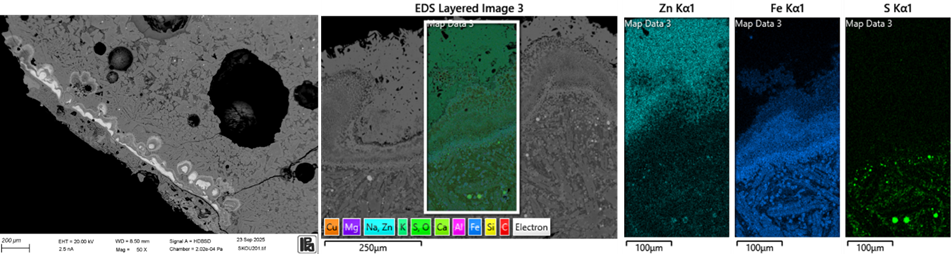
Following the selection carried out by pXRF, the zinc-rich slags collected were analysed by optical microscopy (OM) and prepared for embedding in resin and polishing of epoxy blocks. The slags display comparable absorption patterns and the presence of zinc-rich newly formed phases as in the Harz samples, mainly consisting of zinc-rich oxides and silicates. Relics of sulphidic phases derived from the original ores are also clearly visible, particularly in the samples from Sha (hypotetically this evidence might be related to the practice of adding finely powdered ore, including kadmeia, to the charge, during or at the end of the pyrometallurgy, as described by Dioscorides).
Skouriotissa slag (Skou_1)
Sha slag with an included ceramic fragment
Sha slag
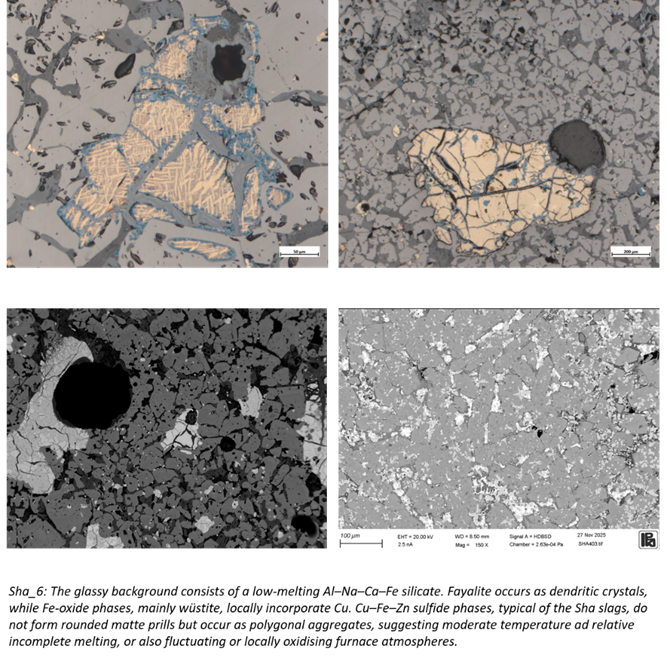
Particular interest was immediately raised by the discovery of zinc-rich technical ceramics at Sha, where initial pXRF analyses indicated surface zinc contents of up to 20%, confirmed also at the SEM–EDS, mainly present in the form of oxides.
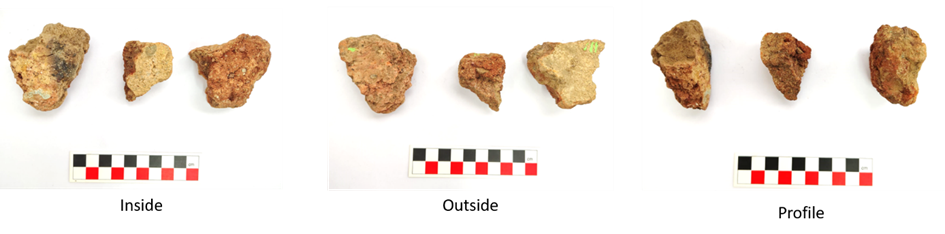
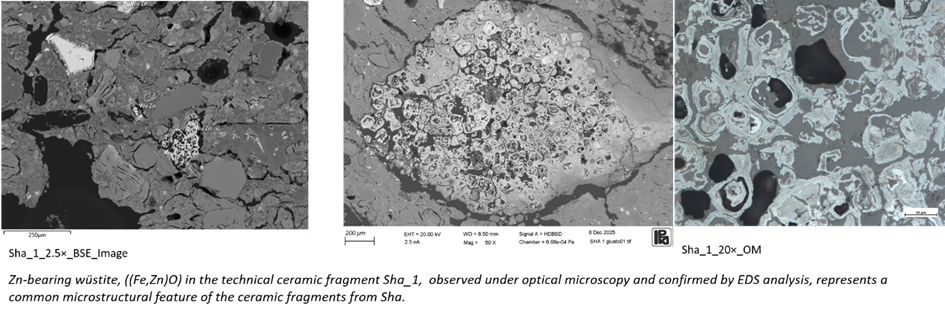
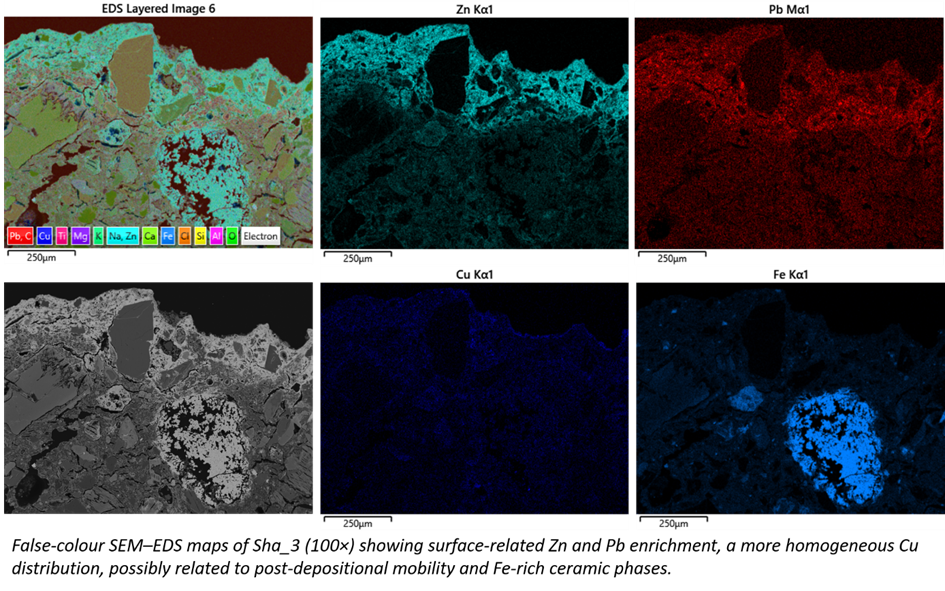
Following the identification of zinc oxide materials at Bredelem (Harz), a final targeted survey at Sha led to the recovery of ceramic fragments bearing clearly visible, intact white to greyish layers, which yielded even higher zinc values. The key significance of this finding lies in the clear presence of a distinct zinc-rich layer, physically and chemically separable from the ceramic substrate and identifiable as a material in its own right rather than as zinc absorbed into the fabric. These fragments offer promising perspectives for further investigation: future optical microscopy and SEM–EDS analyses may reveal the presence of semi-pure zinc oxide phases, potentially representing the first archaeological evidence of zinc oxide in a Cypriot metallurgical context.
The area of Sha is currently also the focus of renewed mining interest aimed at the exploration of Cu, Zn, and locally Ag and Au (in a framework that includes also recent concessions at Klirou, Venus Company), and will therefore be the subject of targeted investigation during the DE-CADMEA project. Further investigation of trace elements and lead isotope analysis (LIA) on this ceramic-adhering material is planned for the near future and may allow a more refined understanding of its provenance.
In addition, an archaeological material of relevance was analysed within the project, namely medical and pharmaceutical compounds from the Roman Tomb of the Surgeon, studied in collaboration with Prof. C. Michaelides, who enabled their analytical characterisation. The interest in pharmaceuticals came from the indication of the use of local Kadmeia for colliria, as the great collirium of Dyagoras.
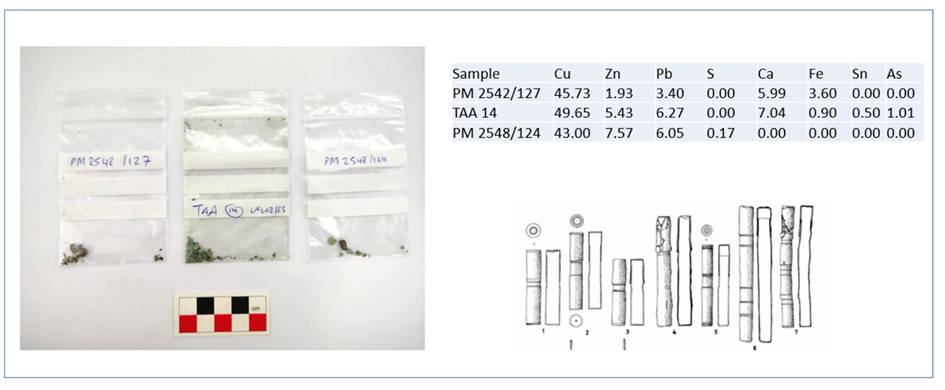
Analytical results show that the medicinal compounds consist of finely dispersed brass-derived oxide scales, containing zinc alongside copper, tin and lead, embedded within ceramic or mineral carrier matrices. SEM–EDS observations indicate that zinc occurs mainly as ZnO, finely distributed within the carrier material; in this case, the zinc oxide is though not be interpreted as kadmeia, but rather as zinc oxide derived from brass scale, where zinc, which oxidise at lower temperatures than copper, forms very fine ZnO. Nevertheless, these materials remain relevant for the project, in their connection to local use of brass-related materials. Further analyses could be aimed at the investigation of trace elements and lead isotope analysis (LIA).